
From Commitments to Results: How Solar Power is Reshaping Zambia's Energy Future
In Zambia's development journey, the true measure of progress lies not in policy statements but in how policy translates into everyday life. Two recent commissionings, the 50-megawatt Mabumba Solar Photovoltaic Plant in Mansa and the 136-megawatt Itimpi II Solar PV Plant on the Copperbelt, offer a clear demonstration of delivery in action: national ambition meeting tangible outcomes for citizens.
For many years, Zambia has relied heavily on hydropower. While that reliance has supported national development, recent droughts, particularly in 2024, exposed the risks of depending on a single energy source. Decreased water levels in key reservoirs led to power shortages affecting households, businesses, and essential services. The lesson was sharp: a one-source energy system is a vulnerable one.
In response, government has enacted a series of reforms aimed at diversifying generation, improving efficiency, and embedding long-term planning into the sector. Central to that effort is a clear objective, to raise generation capacity to 10,000 megawatts by 2031, while ensuring stability and sustainability along the way.
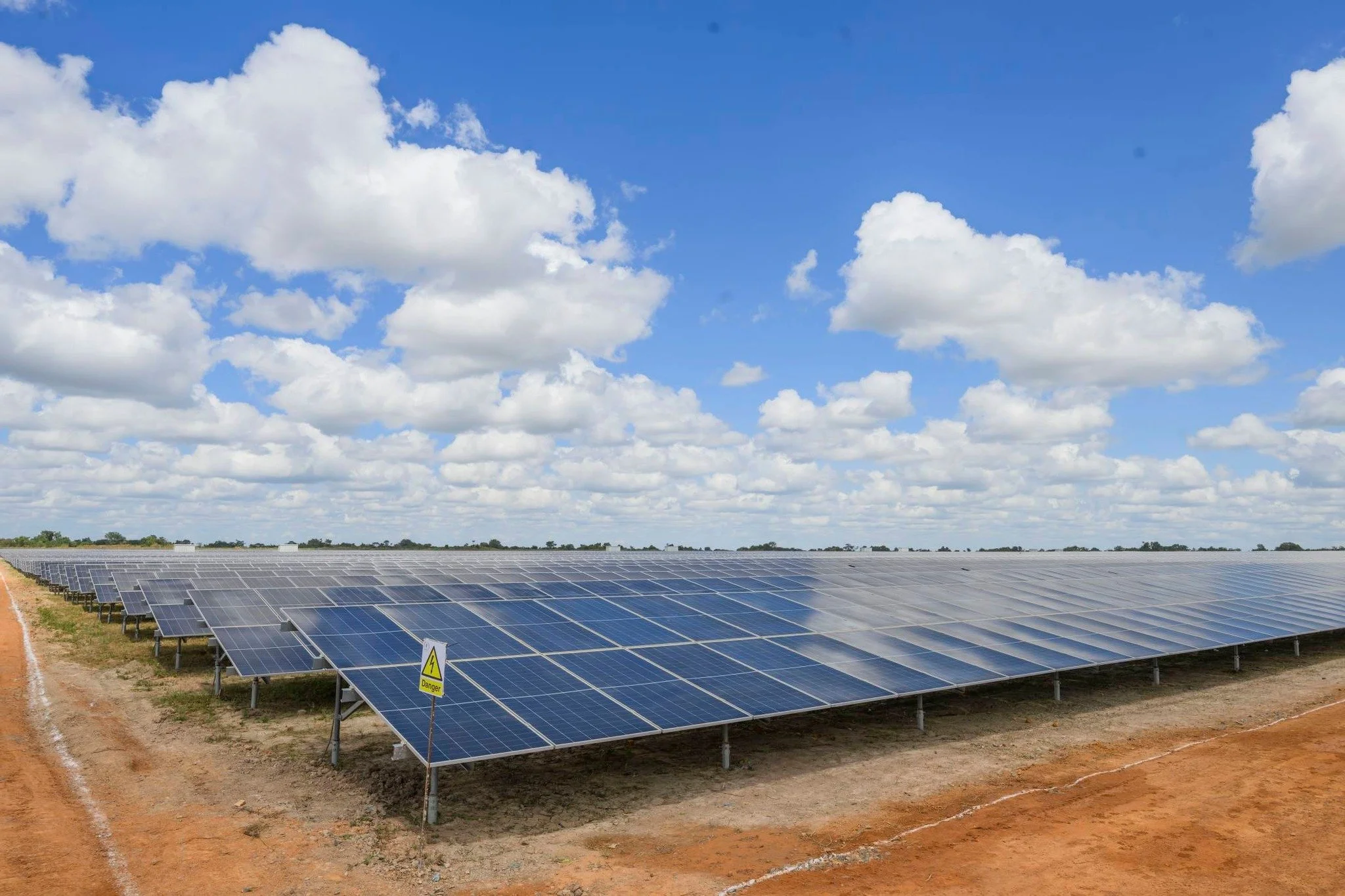
Solar has become the centrepiece of that transition. Through the Presidential 1,000MW Solar Initiative, Zambia is investing in solar generation at scale, reducing dependence on hydropower and shielding the economy from climate-related shocks.
The Mabumba plant, commissioned by President Hakainde Hichilema in April 2026, exemplifies that shift. Its 50 megawatts comfortably meet the 27-megawatt peak demand of Luapula Province, with the surplus exported to the national grid to support supply elsewhere. The Itimpi II plant on the Copperbelt adds another 136 megawatts, with an annual output of approximately 275 gigawatt-hours.
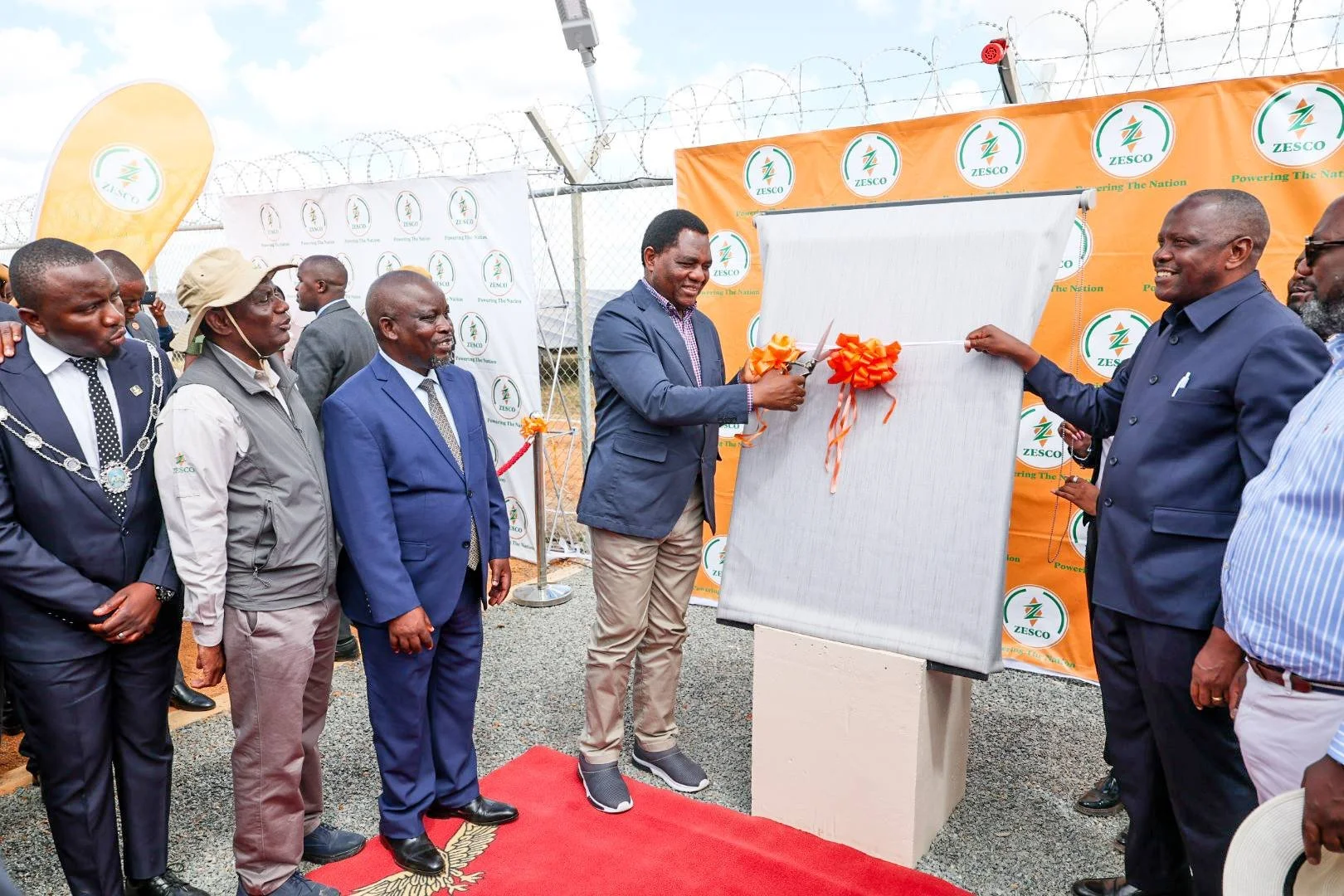
President Hakainde Hichilema inaugurating the Mabumba Solar Photovoltaic Plant in Mansa on 24 April
By 2025, a total of 175.5 megawatts of solar capacity had been commissioned nationally, including projects in Chisamba and Mailo-Serenje alongside rooftop installations. With Mabumba and Itimpi II added, total installed solar capacity has now passed 225 megawatts, with several further projects under construction or near completion. Hundreds more megawatts will come online in phases through 2025 and 2026.
The benefits run far deeper than the headline figures. For many households and small businesses, electricity is not simply a service. It is the backbone of daily life. It powers small enterprises, supports learning, enables healthcare delivery, and sustains livelihoods. When supply is unstable, the impact is immediate and deeply felt.

President Hakainde Hichilema arriving at the CEC Itimpi Solar Plant for the launch on 30 April 2026
A reliable power supply means a marketeer can preserve goods longer. A welder can complete more jobs in a day. A student can study without interruption. Clinics can operate essential equipment consistently, and communities experience improved service delivery across the board. This is what it looks like when policy translates into lived experience.
These projects are also creating opportunity at community level. The Itimpi II construction phase engaged more than 2,500 individuals over 14 months, with approximately 1,800 workers on site at peak. Mabumba created up to 250 jobs during its construction and offered fresh opportunities for skills development. These figures are not just employment statistics. They reflect livelihoods supported, skills developed, and opportunities extended to local communities that need them.
Wider reforms are accelerating the pace of delivery. The Integrated Resource Plan is guiding the development of an optimal energy mix. New frameworks are encouraging greater private sector participation. Policy innovations such as net metering, introduced through Statutory Instrument No. 38 of 2024 and implemented by ZESCO in August 2024, allow households and businesses to generate their own solar power and export any excess back to the national grid. Over 800 customers have been connected to date, contributing more than 22 megawatts of installed capacity. With additional rooftop systems, total distributed solar capacity now exceeds 23 megawatts. Users have collectively exported thousands of megawatt-hours back to the grid, earning approximately K7 million in credits and reducing their own electricity costs in the process.

From L-R: Kasonde Mumba, Delivery Specialist, PDU, Kusobile Kamwambi, Head Presidential Delivery Unit and Dr. Pamela Nakamba, Economic Advisor to the President, following proceedings during the CEC Itimpi Solar Plant for the launch on 30 April 2026
Looking ahead, plans to expand renewable capacity by a further 500 megawatts and integrate battery energy storage systems point to an approach that values both scale and stability. Hydropower will remain essential, but solar is increasingly carrying its share of the load.
Mabumba and Itimpi II are not the destination. They are part of a continuing journey, one in which government policy direction, private sector investment, and community participation are working in concert to deliver results that citizens can see and feel.
From commitments to results, Zambia is building an energy system that is more resilient, more inclusive, and better prepared for whatever the future brings.