
How FISP e-Voucher Is Delivering Support Where It Matters Most
When President Hakainde Hichilema's Government committed to reforming the Farmer Input Support Programme (FISP), the vision was straightforward: ensure public resources reach genuine farmers, maintain transparent management, and deliver measurable benefits. Two farming seasons into these reforms, the results demonstrate how integrity, inclusion, and deliberate policy choices can simultaneously build trust and increase accessibility.
A Digital System Built for Accountability
The FISP e-Voucher system sits at the heart of this transformation. This digital platform enables eligible smallholder farmers to redeem subsidised farming inputs directly from registered agro-dealers using secure electronic vouchers. Farmers contribute K400 while the Government adds K8,000, allowing them to select fertiliser, seeds, and other inputs suited to their local conditions. The system employs electronic Know-Your-Customer (e-KYC) verification, which reduces duplication, eliminates ghost beneficiaries, and strengthens accountability—a marked departure from previous approaches.
Cleaning the Register, Redirecting Resources
The Government's emphasis on integrity became particularly visible during the 2024/25 farming season, when officials undertook a comprehensive clean-up of the FISP beneficiary register. Some 212,851 ineligible farmers—including individuals in active employment and those receiving pensions through schemes like the National Pensions Scheme Authority (NAPSA)—were removed from the programme.
This wasn't about withdrawing support. It was about redirecting it. The improved targeting allowed 208,594 new and eligible farmers to benefit, ensuring public funds reached those who needed them most. In the 2025/26 season, a further 12,165 ineligible farmers were identified and removed, reinforcing the principle that FISP represents a targeted investment in food security and rural livelihoods rather than a universal entitlement.
Nationwide Rollout Reaches Every District
These governance reforms coincided with a significant policy milestone: the complete rollout of the e-Voucher system across all 116 districts in Zambia. What began as a phased reform in 74 districts has evolved into a nationwide programme. The redemption phase concluded on 15 January 2026 with over one million farmers redeeming inputs and achieving nearly 100% redemption rates. The scale, efficiency, and reach of the system reflect both increased farmer confidence and institutional readiness.
Transforming Lives: Sepiso's Story
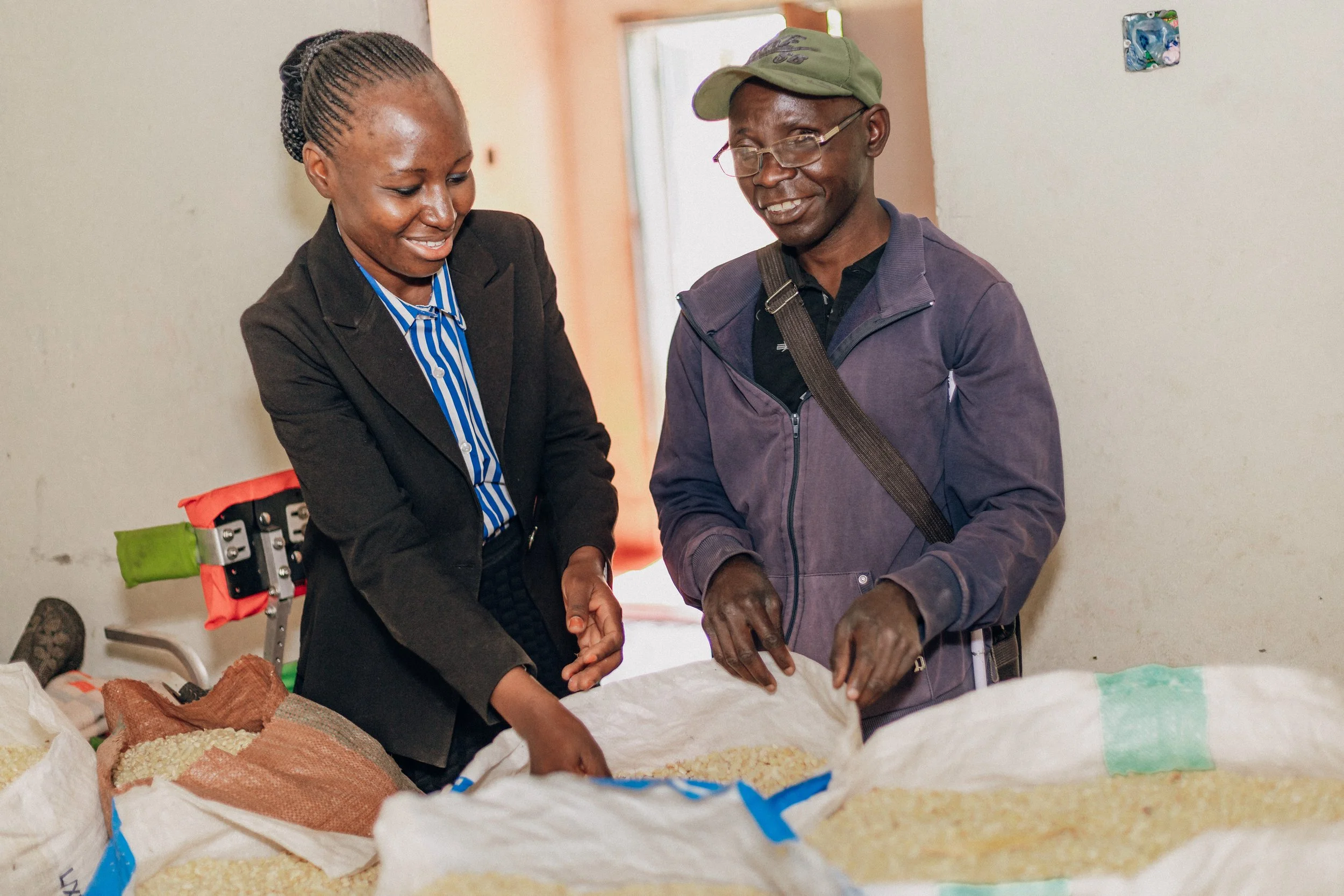
For farmers like Sepiso Muyambango, a visually impaired smallholder in Mufulira, these reforms have changed everything. Before e-Voucher, Sepiso struggled to access FISP support, often relying on intermediaries and facing delays that undermined his productivity.
"In the past, people with disabilities were hidden in homes and became destitute, depending on hand-outs," Sepiso explains. "But in 2022, district officials went round the wards encouraging people like us to form cooperatives and benefit from FISP."
Sepiso accessed the e-Voucher in both the 2024/25 and 2025/26 seasons, redeeming inputs directly from an agro-dealer using a secure code sent to his phone. The result delivered not only timely access but dignity and choice.
"I thank the Government, especially President Hakainde Hichilema, for increasing the e-Voucher amount and including people living with disabilities in the FISP programme," he says. His improved yields now enable him to feed his household and sell surplus maize to the Food Reserve Agency.

Broader Benefits Across the Agricultural Ecosystem
Beyond inclusion, the e-Voucher delivers practical advantages: timely access to inputs during the planting window, reduced congestion at distribution points, faster digital deposits, and expanded participation by private agro-dealers bringing services closer to rural communities. In 2024/25, more than 630 agro-dealers operated nationwide, creating over 5,000 jobs across dealer networks and supply chains.
The 2025/26 season saw agro-dealer participation expand further with 973 approved suppliers under the full 116-district rollout, while analysis of jobs supported continues. Provinces previously less associated with crop production, such as Luapula and Muchinga, are now fully integrated into the national support system, reinforcing the principle of equity and "no farmer left behind."
Coordinated Implementation Drives Results
The Presidential Delivery Unit (PDU) and the Jobs Accelerator Project have played crucial coordinating roles throughout this reform journey, working with the Ministry of Agriculture to track implementation progress, resolve bottlenecks, and ensure policy commitments translate into measurable delivery outcomes.
Building Trust Through Responsible Management
As Zambia advances its agricultural transformation agenda, the FISP e-Voucher demonstrates that integrity, transparency, and inclusion are not abstract principles but practical tools for delivering results. By cleaning the beneficiary register, scaling nationally, and placing farmers at the centre of the programme, the Government shows that responsible management of public resources can change lives and strengthen trust—one farming season at a time.