
Transforming Agriculture into Zambia’s Next Growth Engine
Zambia has placed agriculture at the centre of its economic transformation agenda, positioning the sector alongside mining as a key driver of national growth. With fertile soils, abundant water resources, a favourable climate, and a large labour force, agriculture holds the potential to deliver food security, generate exports, and contribute more consistently to GDP growth.
In April 2024, the Cabinet approved the Comprehensive Agriculture Transformation Support Programme (CATSP), Zambia’s second-generation National Agriculture Investment Plan (NAIP II). CATSP builds on lessons from NAIP I (2014–2018) and aligns with Zambia’s commitments under the Dakar II Food Summit, where the country committed to targeted investments through the Food and Agriculture Delivery Compact
The programme is anchored in ambitious production targets by 2031: 10 million tonnes of maize, 1 million tonnes of soya beans, and 1 million tonnes of wheat, alongside a reduction in post-harvest losses to below 15%. These targets are designed to translate productivity gains into food security and market competitiveness.
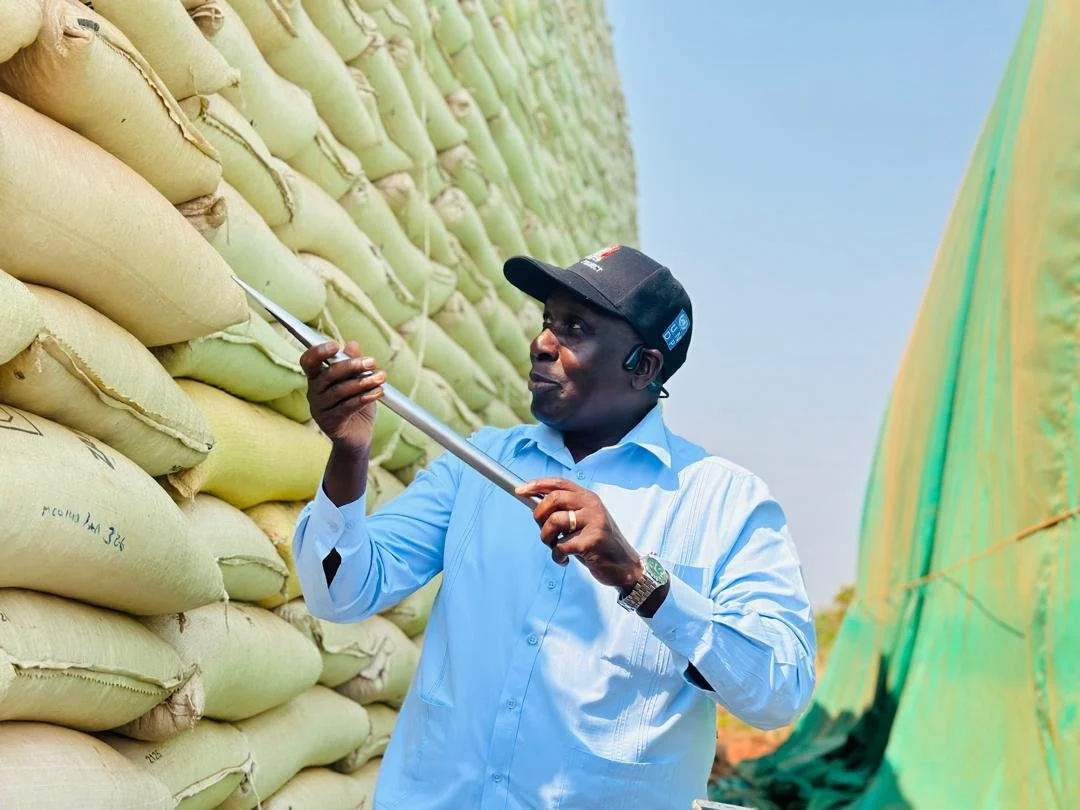
Agriculture Minister Honourable Reuben Mtolo, MP inspecting the Food Reserve Agency (FRA) maize depot in Chinsali District, Muchinga Province. Photo Credit Balewa Zyuulu
A major shift under CATSP is the move to science-driven soil mapping. Instead of blanket fertiliser application, the new approach identifies region-specific nutrient deficiencies and soil conditions, enabling tailored fertiliser blends and corrective measures such as liming. Soil mapping in the Eastern Province has already identified opportunities to significantly improve yields, while mobile soil-testing kits will provide faster, on-site feedback to farmers.
Seed availability and diversification are also being strengthened. A rain-fed wheat seed multiplication programme is being rolled out for suitable agro-ecological zones, alongside efforts to reinforce maize and soya bean production. This diversification reduces risk and increases resilience to climate and market shocks.
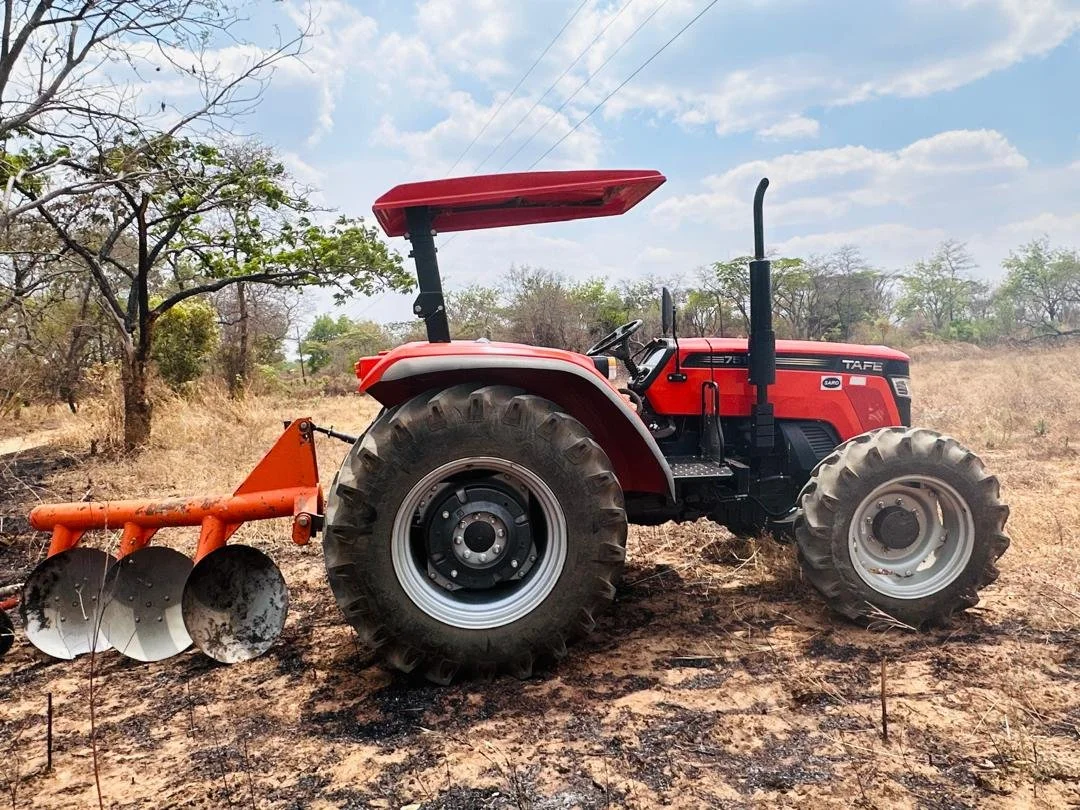
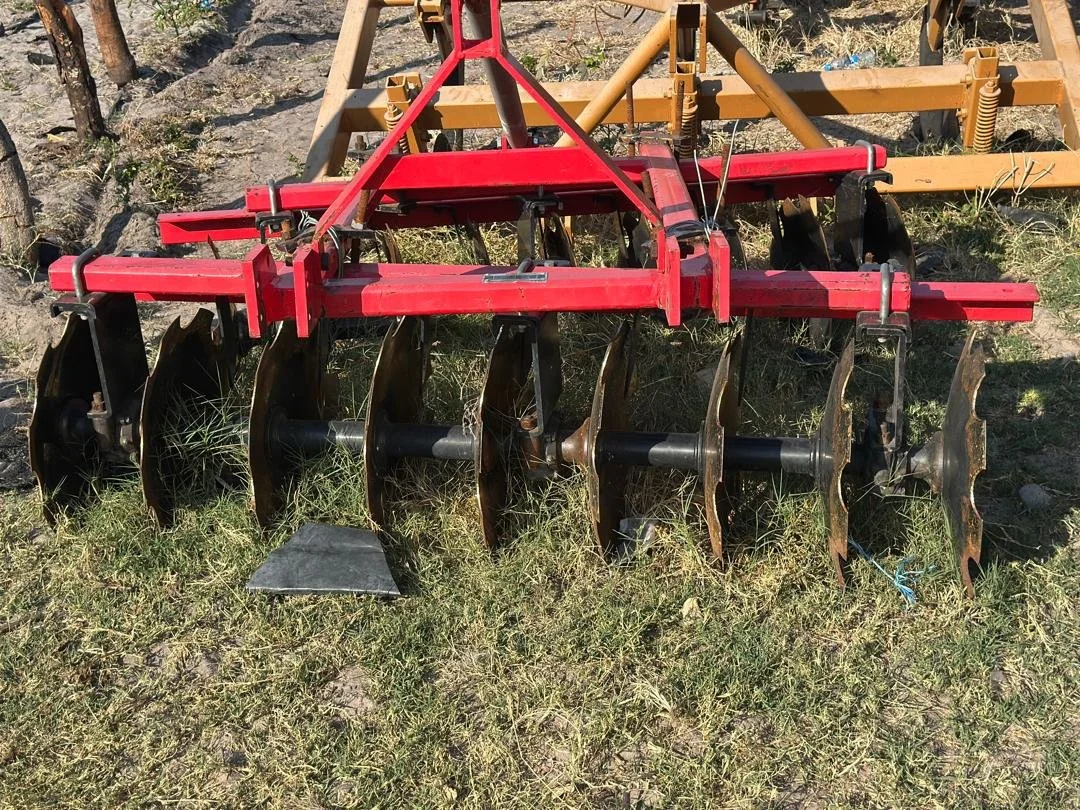
Farming mechanisation equipment (tractor, plough, and harrow disc) at Namushakende Farm Institute supporting agricultural training in Western Province.
Extension services are being expanded to address the high farmer-to-extension-officer ratio, which exceeds recommended standards. Under CATSP, more extension officers are being recruited, supported by partnerships with the private sector, demonstration plots, radio programmes, mobile messaging, and farmer field schools to widen access to practical knowledge.
Irrigation is another central pillar. A national dam-mapping exercise is assessing storage capacity and irrigation potential, with a target to bring 500,000 hectares under irrigation by 2031. Irrigation is expected to secure a significant share of production and reduce vulnerability to climate variability
Mechanisation is being scaled up to close the productivity gap between smallholder and commercial farmers. The 2024–2028 Mechanisation Strategy establishes provincial centres of excellence and farmer training centres equipped with hireable machinery, addressing the low uptake of mechanical power among smallholder households.
Access to finance is expanding through the Sustainable Agriculture Financing Facility (SAFF), which now covers crops, livestock, poultry, and beef production. Market reforms, including warehouse receipting and the establishment of aggregation centres, aim to reduce losses, improve prices, and expand export opportunities. Outdated legislation is being updated or revised to foster a more predictable, investor-friendly environment.
The goal is to raise agriculture’s contribution to GDP beyond 6% and build a resilient, market-oriented agri-food system. The Presidential Delivery Unit (PDU) is coordinating implementation, tracking progress, and supporting problem-solving across ministries to ensure CATSP commitments translate into tangible gains in productivity, resilience, and rural incomes.