
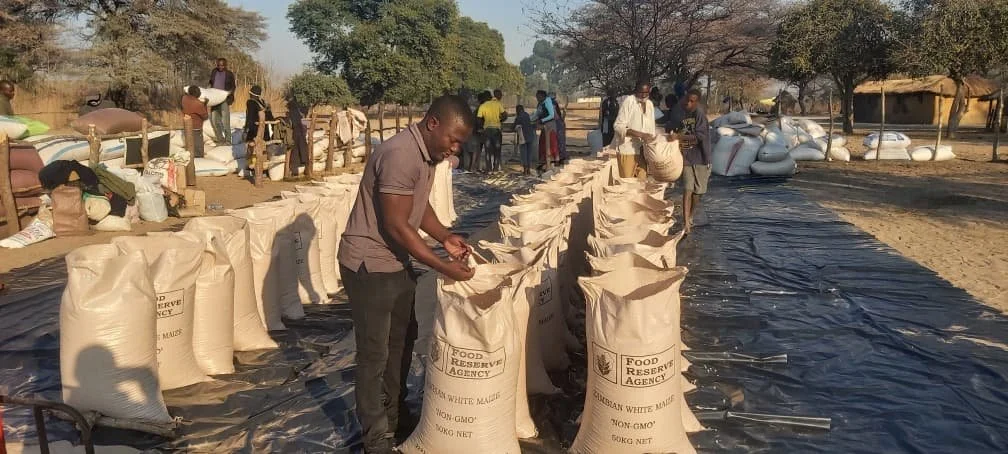
Zambia's Food Reserve Agency (FRA) has completed one of the largest grain procurement exercises in the country's history, purchasing over 1.6 million metric tonnes of maize. The achievement reflects not just improved production volumes, but a deliberate and increasingly coordinated national food security strategy.
From Volatility to Record Procurement
The scale of this milestone becomes clear against recent history. FRA procurement has fluctuated sharply over the past five years, shaped largely by climate variability across Southern Africa
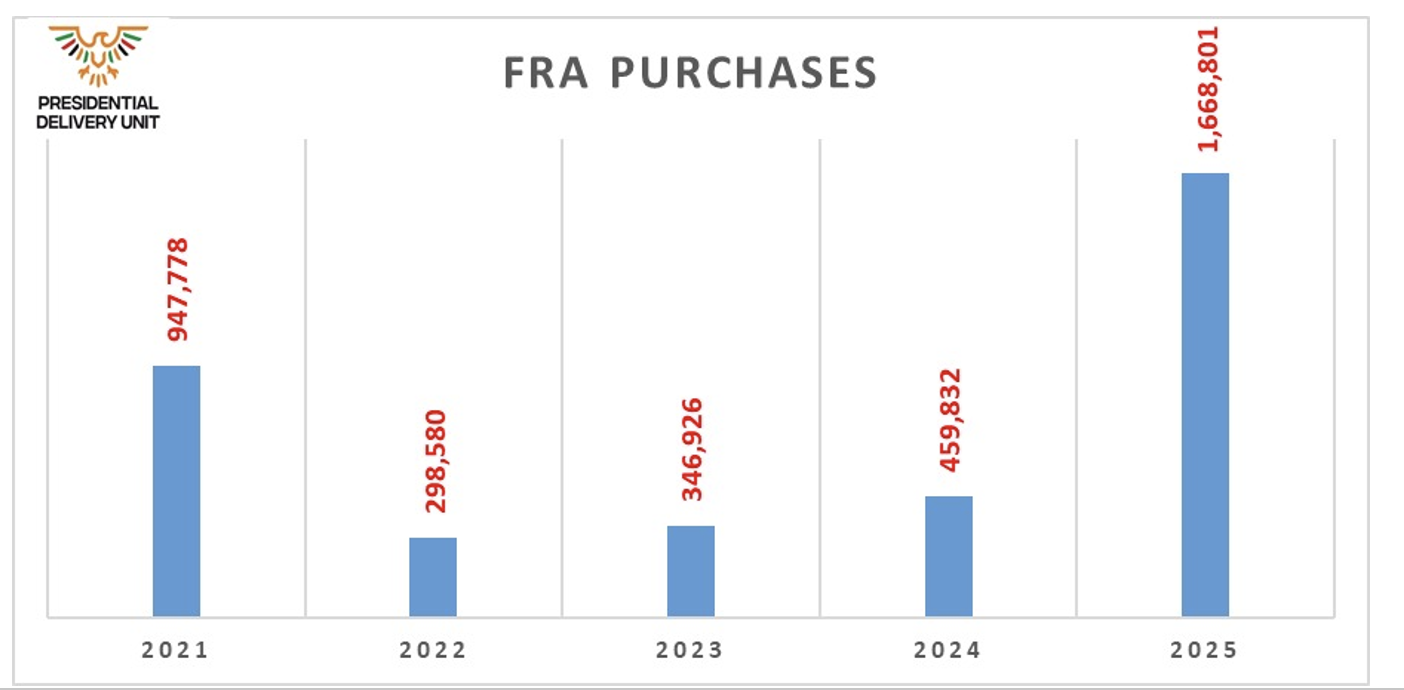
The 2025 figure is not simply a recovery — it represents a structural shift. Under President Hakainde Hichilema's administration, agriculture has been repositioned as a central economic pillar. Expanded irrigation, improved input distribution through the e-Voucher system, strengthened agricultural financing via the Sustainable Agriculture Financing Facility (SAFF), and the coordination work of the Presidential Delivery Unit (PDU) have together created a more stable and predictable environment for farmers.
Managing Surplus, Not Just Scarcity
The 2024/25 agricultural season produced over 3.6 million metric tonnes nationally. The FRA's procurement of 1.6 million metric tonnes — a substantial share of that output — was managed carefully to leave room for private-sector participation from millers, processors, exporters, and grain traders.
For smallholder farmers, the FRA remains a reliable buyer of last resort, ensuring that increased production does not translate into price collapse. At the same time, the agency is not seeking to dominate the market. Warehouse receipt systems are being developed, and regional export opportunities are expanding. The FRA's role is stabilisation, not control.
A Strategic Buffer in an Uncertain Climate
Southern Africa's vulnerability to drought is well established, and recent seasons have reinforced the case for robust food reserves. Securing 1.6 million metric tonnes strengthens Zambia's buffer stock capacity, supports domestic price stability, and improves the country's ability to respond to humanitarian needs — while also enhancing its position in regional trade.
The Road to 2031
This procurement supports Zambia's longer-term agricultural targets: 10 million metric tonnes of maize, one million metric tonnes of soybeans, and one million metric tonnes of wheat by 2031. Reaching those figures will require continued investment in irrigation, mechanisation, extension services, and market development.
The record FRA purchase suggests institutional capacity is growing alongside production. Reforms will refocus the FRA on strategic grain reserves while enabling participation in commodity exchanges for greater market transparency.
The 1.6 million metric tonne milestone is, ultimately, more than a logistical achievement. It signals that Zambia is moving from reactive food security management towards organised agricultural scaling — from managing scarcity to planning for growth.