
Chipata Veterinary Lab Powering Zambia's Beef Export Ambition
In Chipata, Eastern Province, an important transformation is underway at the Chipata Provincial Veterinary Laboratory, helping Zambia move closer to its ambitious goal of growing the livestock sector and boosting beef exports.
A Billion-Dollar Ambition
The rehabilitation and construction of veterinary laboratories across the country are key components of Zambia's beef export initiative, which aims to unlock up to USD 1 billion in beef exports by 2031. Among the rehabilitated laboratories are those in Chipata, Isoka, Choma, and Kasama, which are part of a broader effort to strengthen animal disease management to support and improve livestock productivity.
What the Rehabilitation Has Delivered
The impact of the investment is already noticeable at the Chipata Provincial Veterinary Laboratory. Dr Martha Sinzala, the Acting Provincial Veterinary Officer for Eastern Province, explains that the laboratory serves as a reference centre for all district laboratories throughout the province and plays a critical role in diagnosing livestock diseases.
"This laboratory functions as both a diagnostic and research unit. With the rehabilitation of the laboratory, we can now diagnose diseases much more quickly, especially during outbreaks."
Before the rehabilitation, Eastern Province faced significant challenges in quickly and effectively diagnosing animal diseases. These challenges reduced livestock productivity and limited Zambia's ability to access export markets that require strict animal health standards. The province is particularly vulnerable to transboundary animal diseases, such as Foot-and-Mouth Disease, which can severely disrupt trade during outbreaks.
The laboratory has been equipped with microscopes, centrifuges, autoclaves, analysers, incubators, pipettes, balances, and refrigeration units to support the diagnostics and sample processing section, which also includes standby generators.
"To achieve the Presidential initiative for beef exports, the Government rehabilitated this laboratory and provided excellent equipment for disease diagnosis. One requirement for exporting beef to other countries is that our animals must be free of diseases."
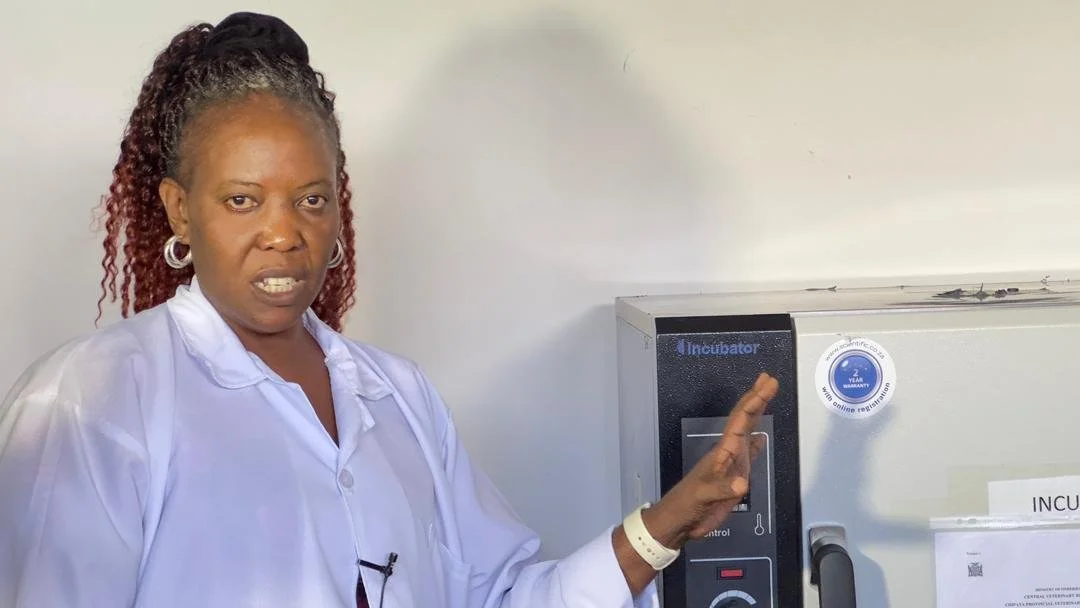
Acting Provincial Veterinary Officer for Eastern Province, Dr. Martha Sinzala, explains the function of a newly procured incubator during a monitoring and evaluation visit at Chipata Provincial Veterinary Laboratory on 29 February 2026.
From Lab Results to Export Markets
The rehabilitation and construction of veterinary laboratories is part of a broader livestock development strategy that focuses on disease control, vaccination, improved nutrition, improved calving rates, and market access. The interventions are already yielding measurable results. Recently, during the National Delivery Day, the Presidential Delivery Unit (PDU) reported a significant decrease in animal disease mortality — from 12.5% in 2023 to approximately 7.7% in 2025 — while vaccination coverage has increased to 85%. These improvements are laying a strong foundation for Zambia's beef export programme.
The connection between veterinary laboratories and beef exports may not be immediately evident to many citizens, especially those outside the livestock sector. However, sound animal health systems are essential for international livestock trade. Countries that import beef require proof that animals are raised in disease-free environments and that any potential outbreaks can be quickly detected and controlled.
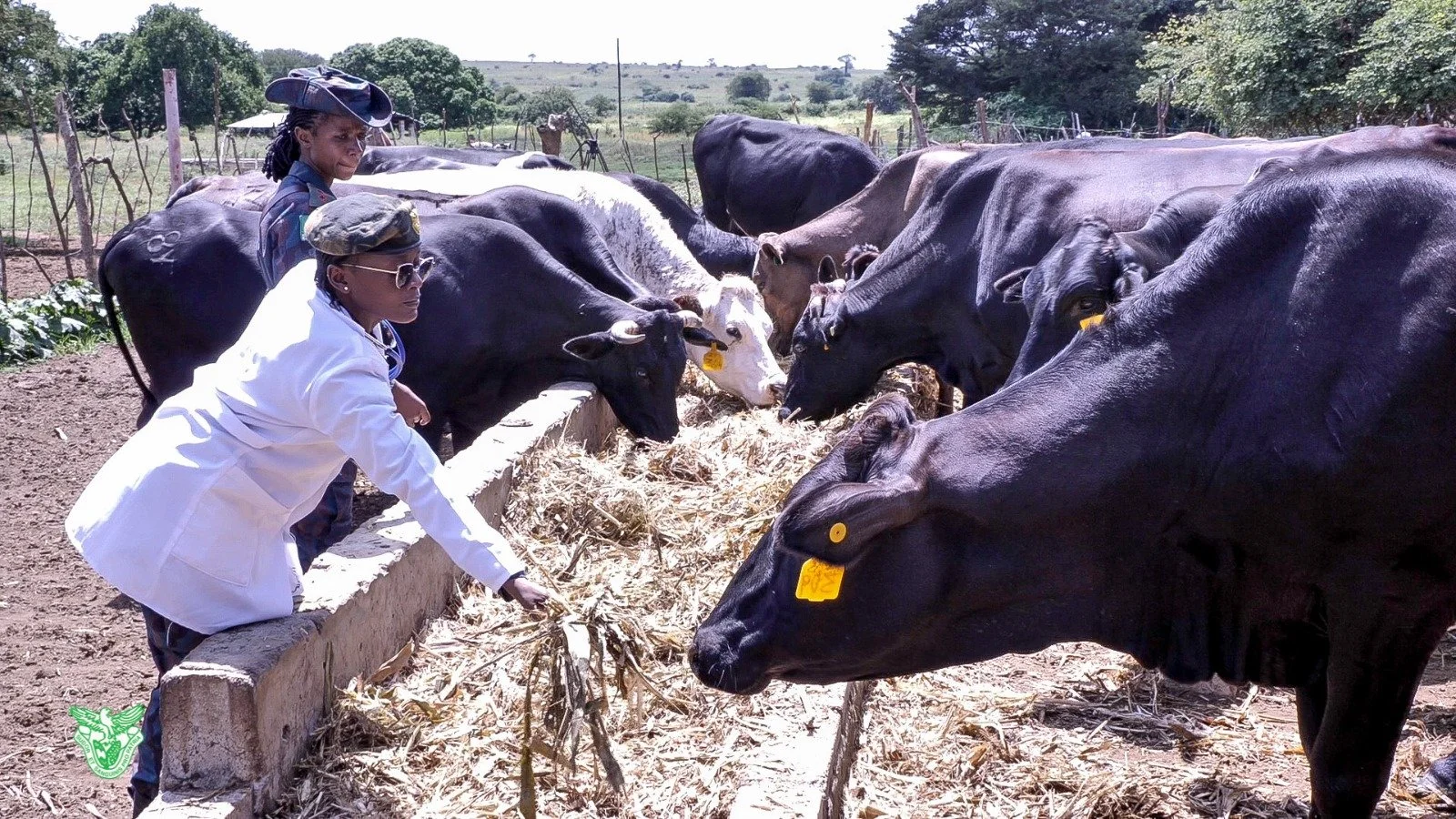
To address this, the Government has established Animal Disease-Free Compartments in several districts as part of the beef export programme. The first five certified compartments are located in Chikankata, Chipata, Chisamba, Mumbwa, and Namwala, forming the backbone of Zambia's export system. Under this system, cattle raised in disease-free compartments are monitored by veterinary officers, tested in certified laboratories, and processed under strict sanitary standards before being exported to regional markets.
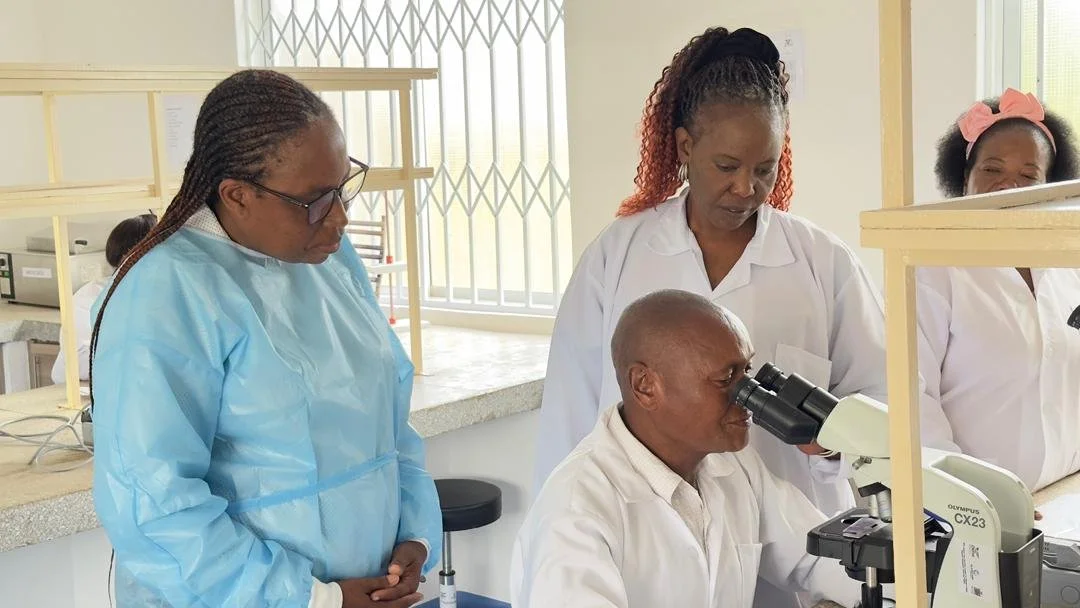
A laboratory technician at Chipata Provincial Veterinary Laboratory demonstrates disease screening using a newly procured microscope during a monitoring and evaluation visit on 29 February 2026. Looking on are Acting Provincial Veterinary Officer for Eastern Province, Dr. Martha Sinzala, and a Presidential Delivery Unit (PDU) Communication Specialist Euphrasia Mapulanga.
What It Means for Farmers
For farmers, the reforms mean more than policy changes — they represent new economic opportunities. With improved disease control systems, farmers can reduce livestock losses, enhance cattle productivity, and gain access to higher-value markets.
A Blueprint for Economic Diversification
Ultimately, the rehabilitation of veterinary laboratories such as the one in Chipata illustrates how investments in public infrastructure can drive economic transformation, in line with the 8NDP and Vision 2030. Strong animal health systems enhance livestock productivity, protect farmer incomes, and create opportunities in export markets.
The story of the Chipata Veterinary Laboratory goes beyond the renovation of a building. It highlights how coordinated Government efforts — including disease surveillance, vaccination, laboratory rehabilitation, and the establishment of disease-free compartments — collectively strengthen the livestock sector and contribute to national economic growth.
As Zambia continues to develop its beef value chain, facilities like the Chipata Provincial Veterinary Laboratory will be crucial in ensuring the country's livestock sector remains both productive and competitive in international markets. The Government encourages all players in the beef value chain to seize opportunities, invest, and generate income and jobs for citizens.
The initiative is part of Zambia's broader strategy to diversify the economy and complement the mining sector. President Hakainde Hichilema believes that livestock has significant potential to contribute to GDP — but this starts with disease management, and veterinary laboratories are central to that effort.